2025 Workspace Residency
2025 Workspace Residency Exhibition
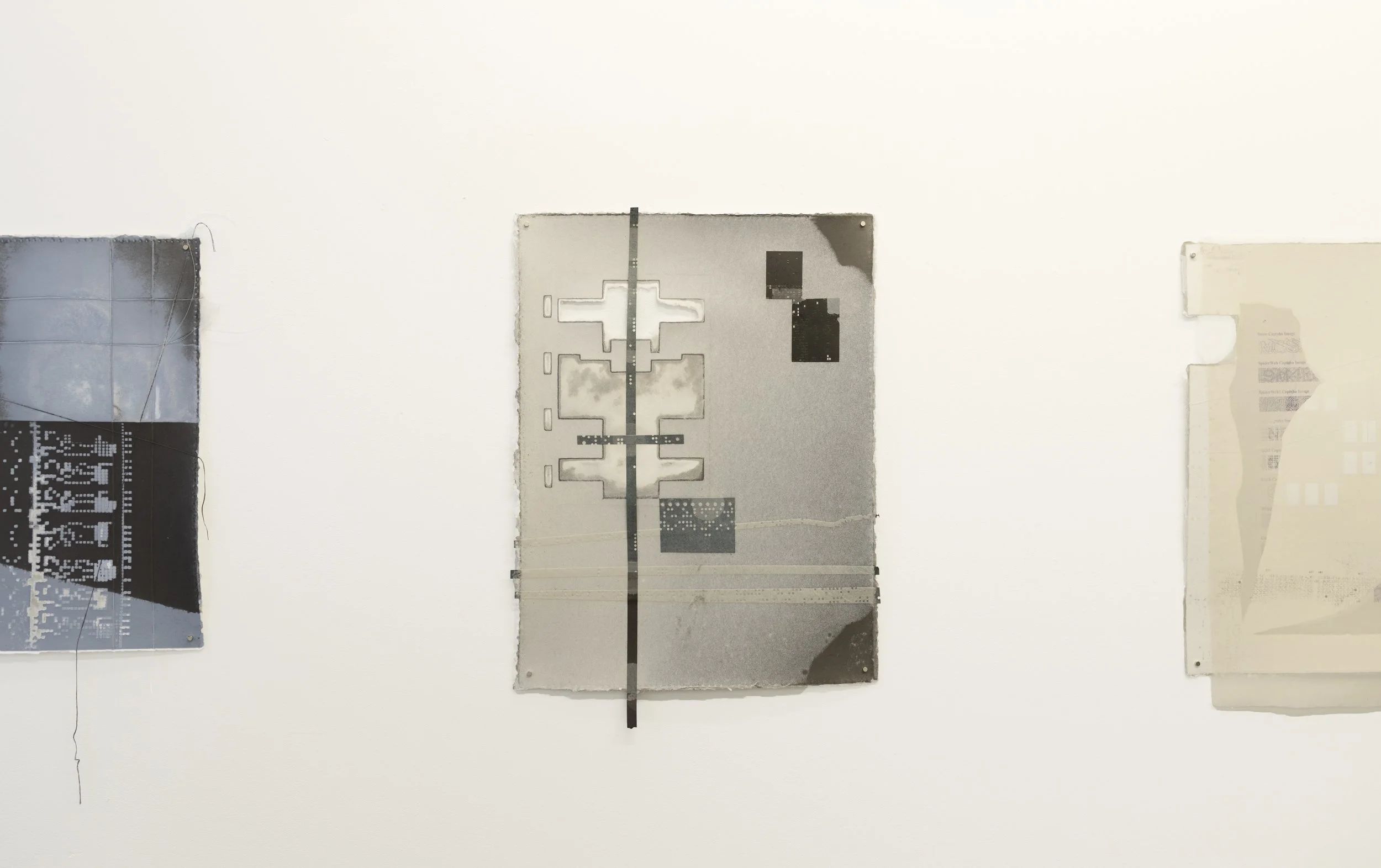
SARAH ZARINA HAKANI
JOHANNAH HERR
SARANOA MARK
STEPHANIE SANTANA
June 29 – September 11, 2026
Opening Reception: Thursday, July 16, 5-7 PM
Jordan Schnitzer Gallery at Dieu Donné
Brooklyn Navy Yard, Building 3, Suite 602
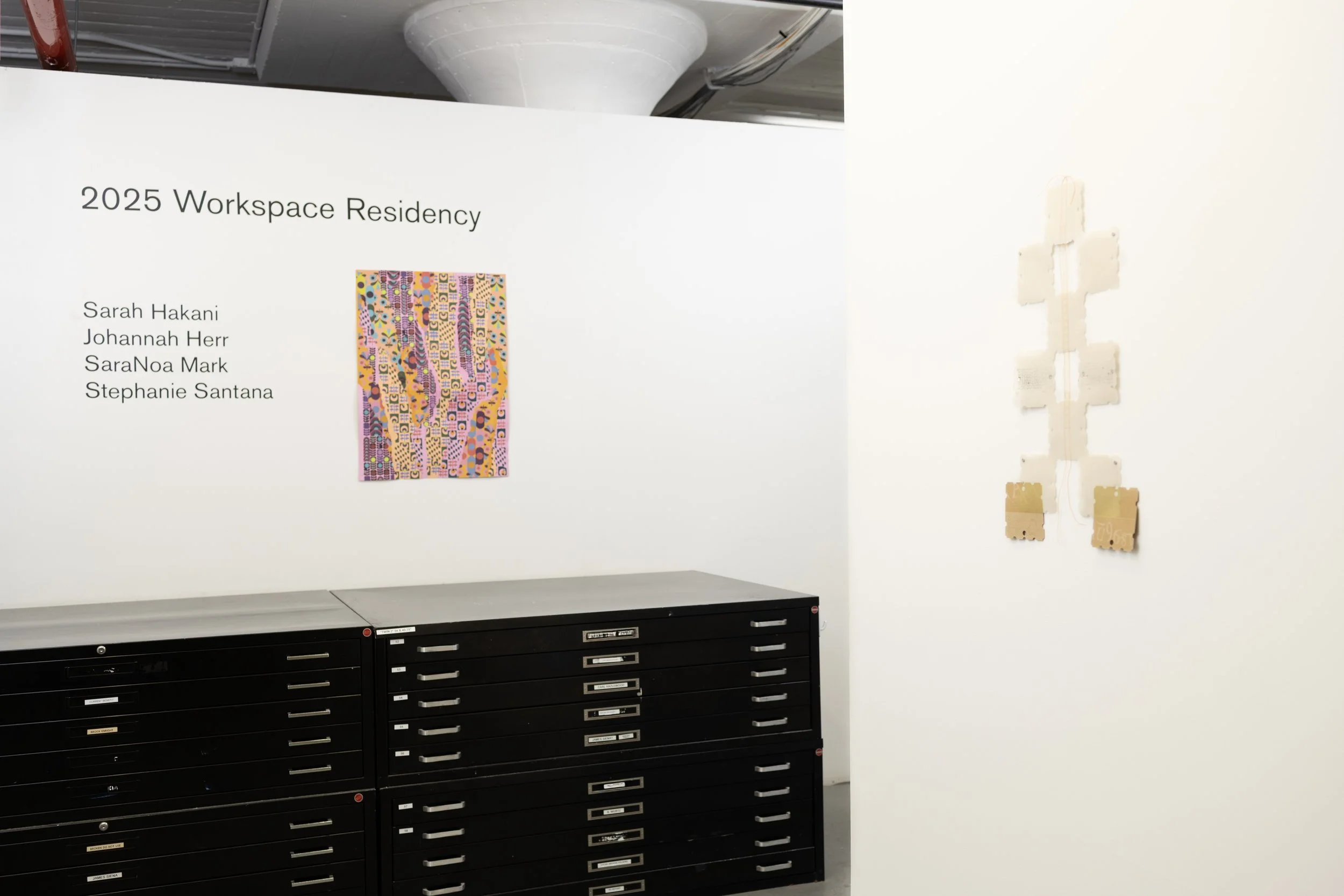
Dieu Donné is excited to present its annual Workspace Residency exhibition, which showcases the innovative works produced in handmade paper by our 2025 residents: Sarah Zarina Hakani, Johannah Herr, SaraNoa Mark, and Stephanie Santana. As with all of our Workspace residents, papermaking was a new medium for these four artists. Throughout their year-long residencies, each artist embraced the intricacies, challenges, and unexpected results of working wet-on-wet in paper pulp, to find new avenues of expression within their practice.
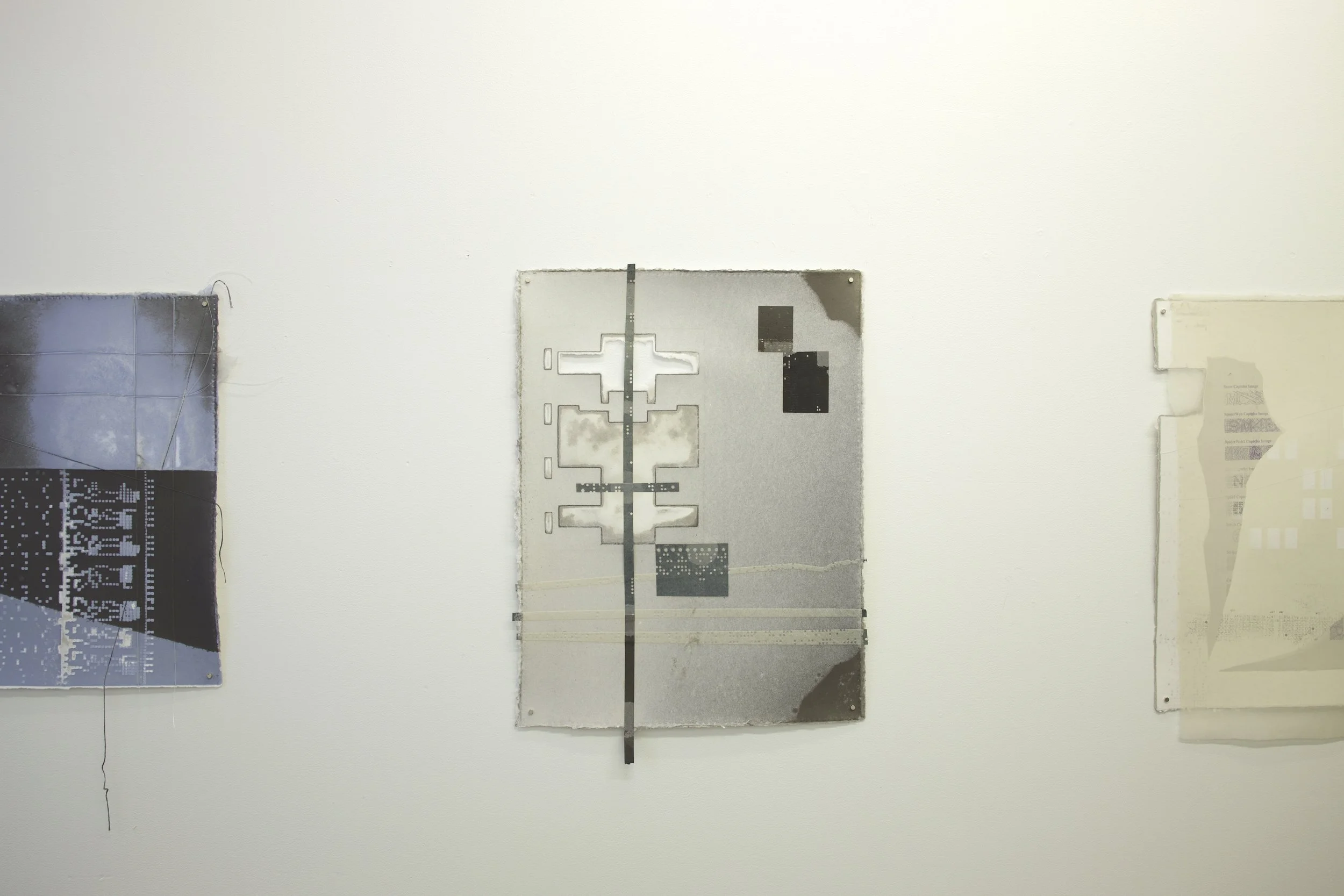
Working with collaborator Tatiana Ginsberg, Sarah Zarina Hakani produced a series of abstract collages that combine artifacts of recent and obsolete technology to instill the randomized aesthetics of computing with human intentionality. In Let’s Confirm You’re Human_03 (all works 2026), Hakani juxtaposes the stenciled patterns of antiquated computer punch cards with randomly-generated and laser-cut imagery from reCAPTCHA’s human-verification technology, calling attention to both the unseen laborers behind data processing and the history of early computing, especially as it relates to so-called women’s work of Jacquard weaving.
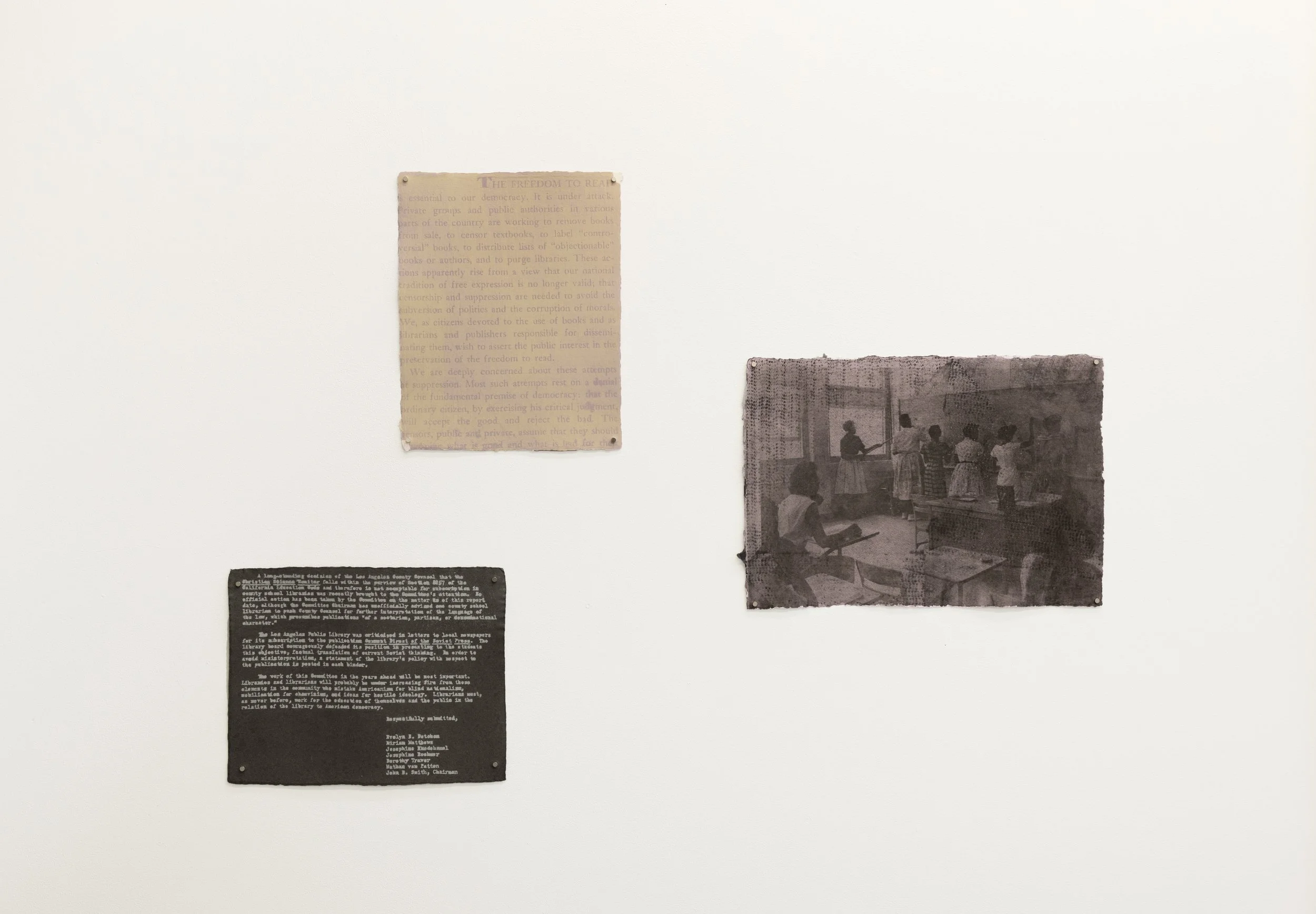
With a series of screen-printed works, Stephanie Santana similarly transforms archival materials drawn, in her case, from public repositories and family collections, including photographs her grandfather took of Dallas-area schools in the 1950s and historical documents that honor the legacy of her great-aunt, a pioneering Black librarian and anti-censorship activist during the McCarthy era. A printmaker by training, Santana worked with Katharine DeLamater to explore the possibilities of image-making with pulp. By combining screenprinting with washes of pulp paint, Santana clouds the legibility of her archival documents, achieving a tension between documentation and obfuscation that resonates with her ancestors’ efforts to promote literacy and education while battling censorship.
While not immediately apparent, historical documents provide a troubling subtext to Johanna Herr’s vividly colored edition, which she produced with Amy Jacobs. Hidden within a floral camouflage inspired by mid-Century motifs is a barely discernible excerpt from a racially restrictive housing covenant, the kind that helped fuel suburban “white flight.” To create her densely patterned imagery, Herr “wet collaged” torn sheets of wet and dry handmade paper that she had stenciled with linen pulp paint. The ragged edges of her layered palimpsest heighten the tension between the nostalgic beauty on the surface and the racist policies held within.
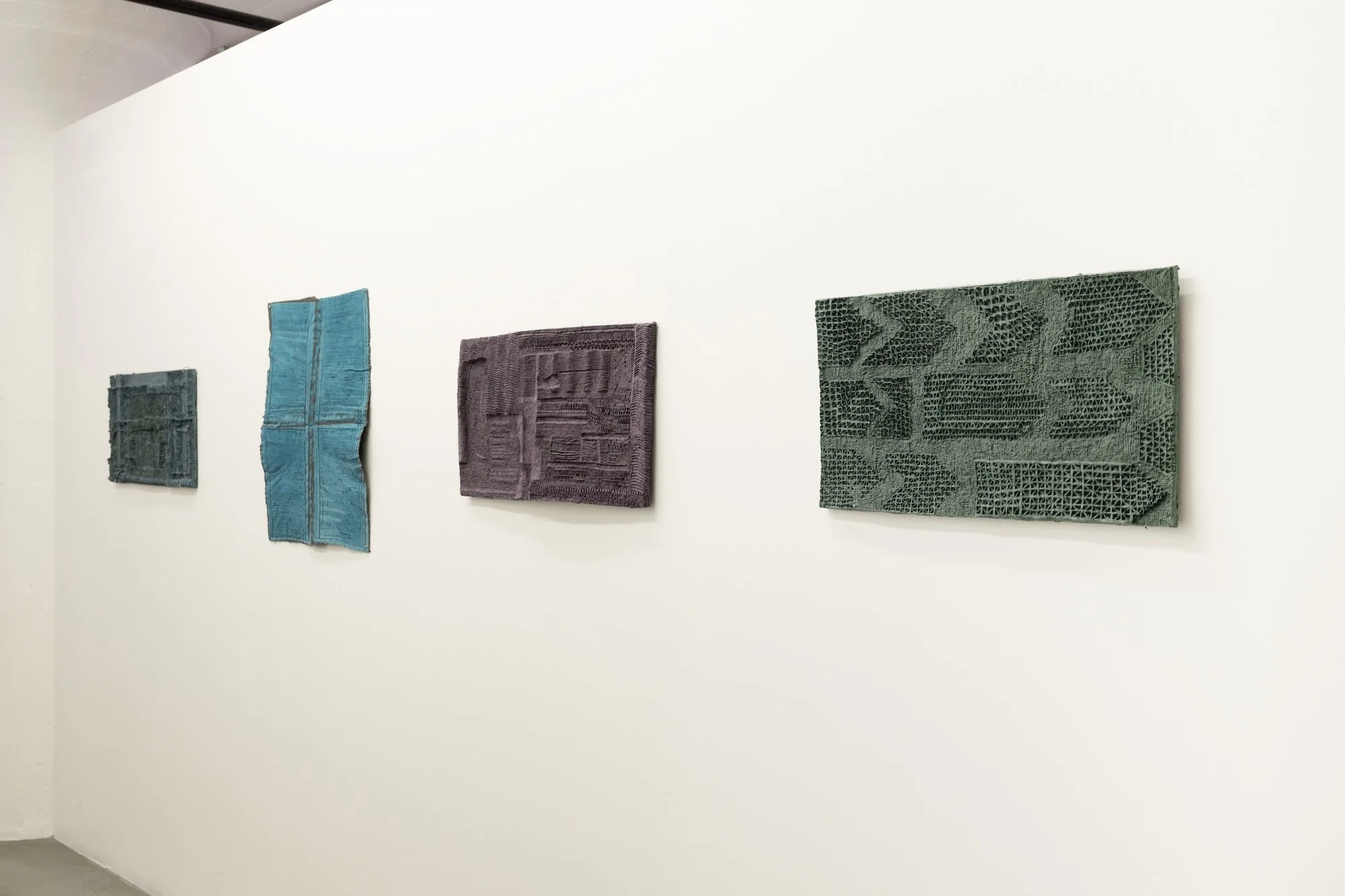
For their work in handmade paper, SaraNoa Mark translated their drawing and sculpture practices into cast and carved cotton. Also working with DeLamater, Mark experimented with pigmented casting cotton to create a series of three-dimensional reliefs with intricate, topographical surfaces that simultaneously read as map and landscape. In Shorter Stories, Mark combined casting cotton with kaolin clay to produce a rough and mottled surface that appears to mark the effects of time through erosion, excavation, and decay. In the two-dimensional Something Finite Something Forever, Mark carved directly into the top layer of paper, creating a network of ridged channels that also reveal the underlying sheet and, thereby, the process of the work’s making.
Throughout the exhibition, we witness each artist experimenting with strategies of layering and transparency, extraction and accrual, masking and unmasking to explore what can be seen and what cannot, what is revealed and what remains hidden, existing just beneath, or within, the surface.